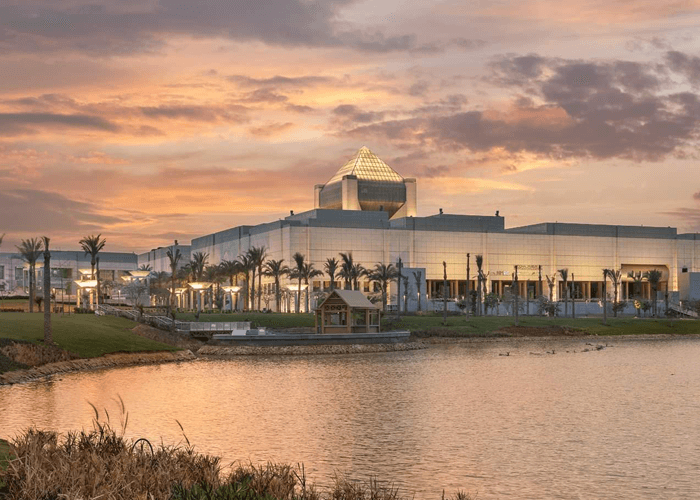
The Grand Egyptian Museum: The Ultimate Gateway to Ancient History

Discover the Grand Egyptian Museum (GEM), the world’s largest archaeological museum complex dedicated to a single civilization. Located just moments away from the Great Pyramids of Giza, this modern architectural marvel houses over 100,000 priceless artifacts, including the complete, breathtaking treasure collection of King Tutankhamun. Explore its state-of-the-art exhibition halls, grand staircase, iconic royal statues, interactive educational spaces, and sustainable design. Plan your visit with our complete visitor guide to experience the ultimate blend of ancient Pharaonic grandeur and 21st-century innovation.

Title: Inside the Grand Egyptian Museum: A 21st-Century Sanctuary for Pharaonic Splendor

Introduction: A New Chapter in Egyptology

For centuries, the world has been captivated by the secrets buried beneath Egypt’s golden sands. From the majestic Pyramids of Giza to the hidden tombs of the Valley of the Kings, the legacy of the Pharaonic civilization remains one of humanity’s greatest achievements. Today, that legacy finds a monumental new home: The Grand Egyptian Museum (GEM).

Situated on a vast desert plateau overlooking the timeless Giza Pyramids, the Grand Egyptian Museum is not merely a venue for display; it is a cultural epicenter, an architectural landmark, and the largest archaeological museum complex in the world dedicated to a single civilization. Designed to seamlessly bridge the gap between ancient history and modern innovation, the GEM stands as a proud testament to Egypt’s past, present, and future.

Architectural Marvel and Visionary Design

The story of the Grand Egyptian Museum begins with a vision to create an immersive space worthy of Egypt’s unmatched heritage. The architectural design, selected through an international competition won by the Dublin-based firm Heneghan Peng Architects, is deeply rooted in sacred geometry and landscape alignment.

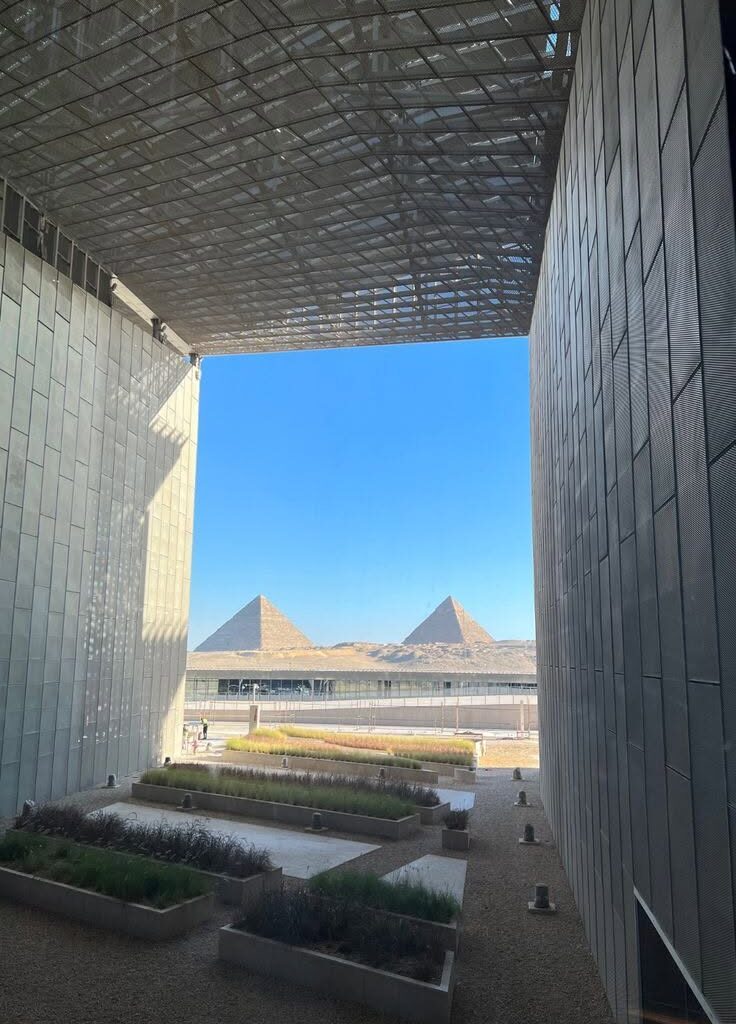
  • The Visual Axis: The museum’s structure is uniquely aligned with the Great Pyramid of Khufu and the Pyramid of Khafre. A sweeping translucent alabaster wall forms the facade, catching the natural sunlight of the desert and creating a striking visual link between the ancient monuments and the modern complex.
  • Monumental Scale: Spanning over 500,000 square meters, the site features sprawling outdoor gardens, grand plazas, conservation laboratories, conference facilities, a children’s museum, and immersive exhibition galleries.

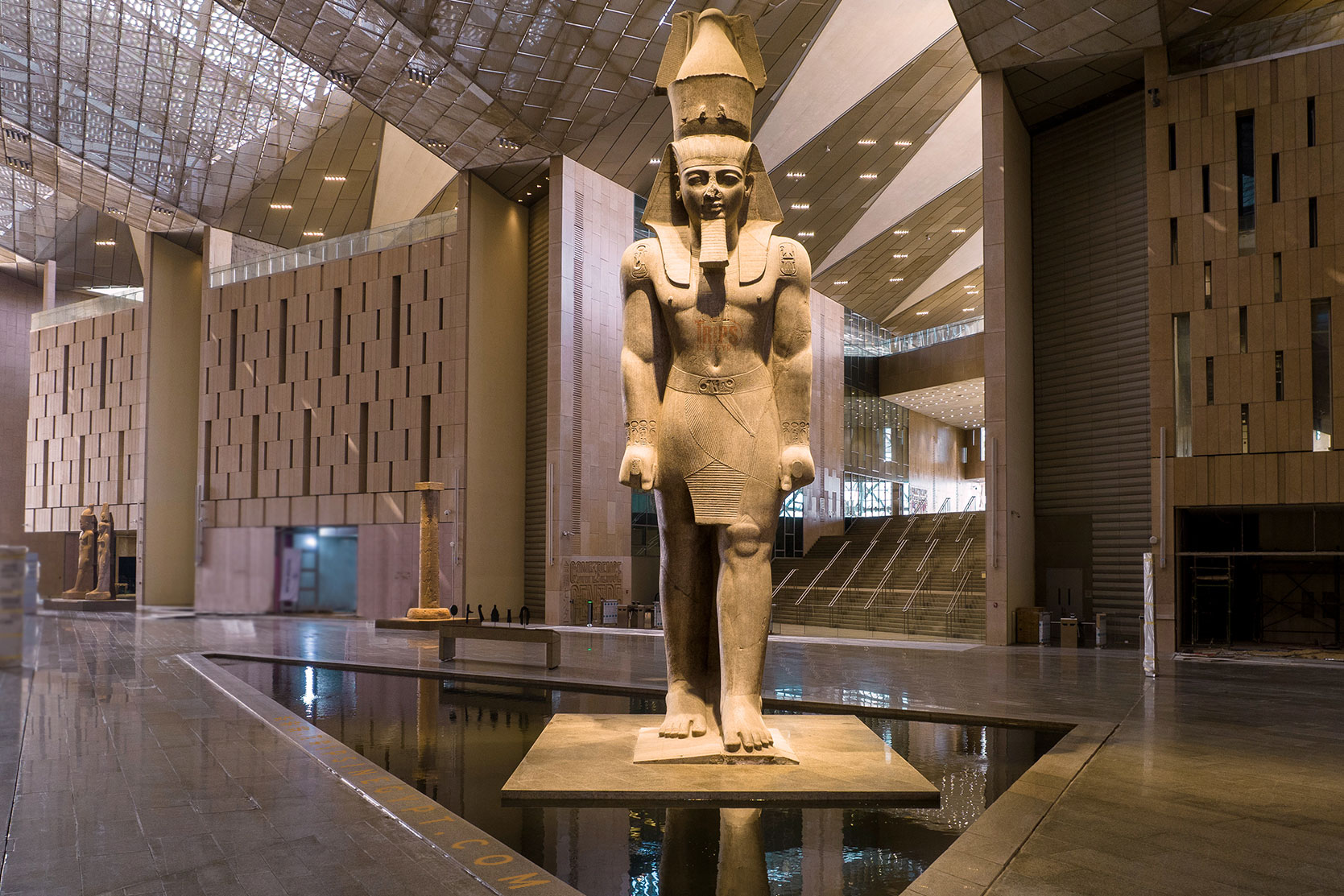
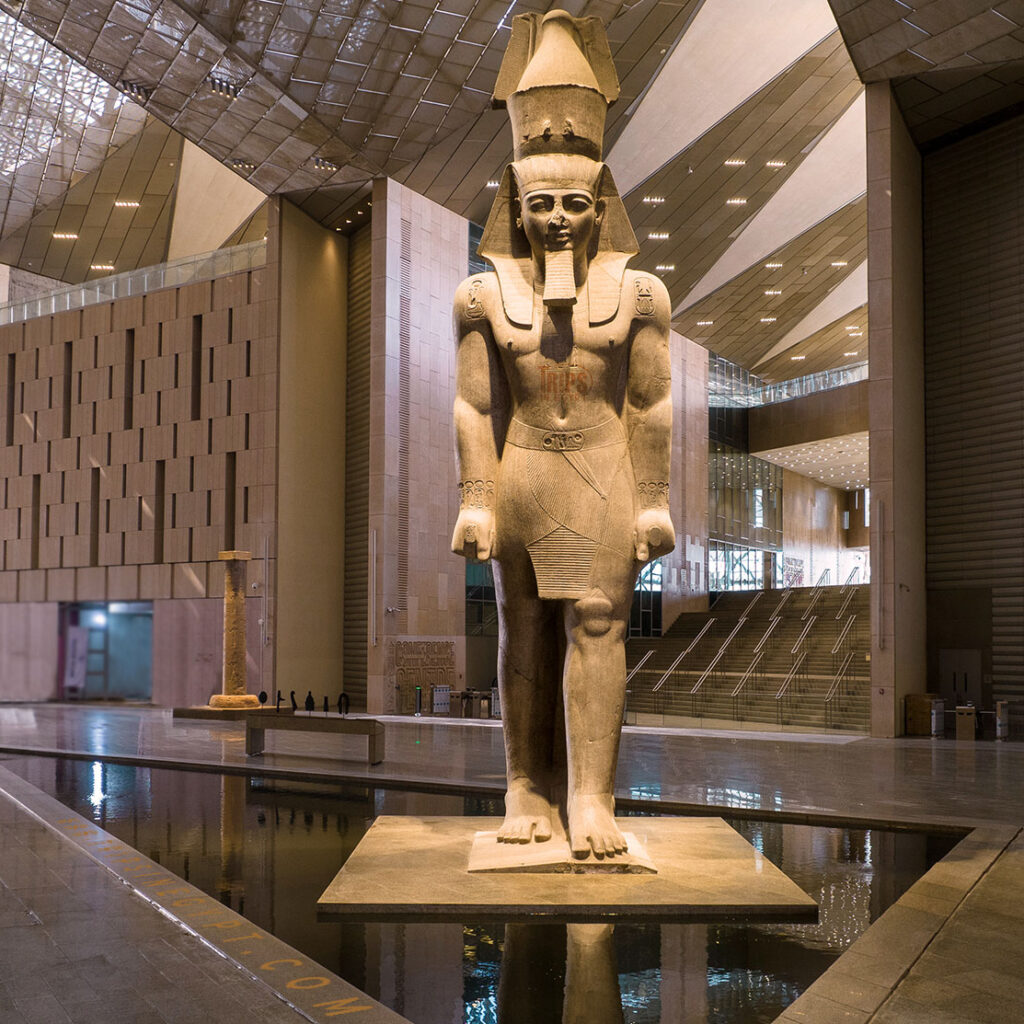
Upon stepping into the museum’s immense atrium, visitors are greeted by the towering 3,200-year-old colossus of Ramses II, a majestic 83-ton granite statue that sets the tone for the awe-inspiring experience that lies ahead.
The Grand Staircase: Walking Through Time

One of the most breathtaking features of the GEM is the Grand Staircase, a multi-tiered vertical gallery that rises through the heart of the building. As visitors ascend, they embark on a chronological journey through four distinct historical themes:

  1. Royal Image: Showcasing how pharaohs projected power, divinity, and authority through statuary and monumental art.
  2. Divine Places: Highlighting the sacred relationship between the gods, temples, and religious rituals across different dynasties.
  3. Life and Death: Exploring the intricate burial customs, mummification practices, and beliefs regarding the afterlife that defined Pharaonic culture.
  4. Kings and Gods: Examining the complex theological concepts where kings served as the vital link between the earthly world and the divine realm.

Flanked by massive statues, stelae, sarcophagi, and architectural fragments, the Grand Staircase offers panoramic views of the Giza Pyramids at its summit, providing a dramatic framing of history.
The Treasure of King Tutankhamun: Unveiled Complete

While the museum holds thousands of world-renowned artifacts, its crowning glory is the comprehensive exhibition dedicated to the legendary “Boy King,” Tutankhamun.

For the first time since Howard Carter’s epochal discovery in the Valley of the Kings in 1922, the complete collection of over 5,000 objects from Tutankhamun’s tomb is displayed together in a unified space. Spanning dedicated galleries designed with state-of-the-art lighting and climate control, this exhibition includes:
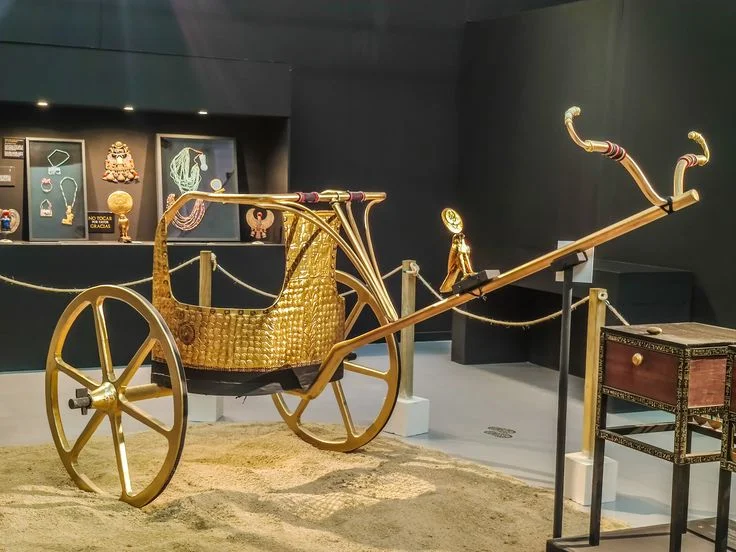
  • The Golden Mask and Sarcophagi: Intricately crafted masterpieces of gold, lapis lazuli, and precious stones representing the peak of ancient metallurgy and artistry.
  • Royal Chariots and Armor: Perfectly preserved wooden chariots, hunting equipment, and ceremonial weapons.
  • Personal Belongings: Everyday items such as sandals, jewelry, games, musical instruments, and food containers that offer an intimate glimpse into royal life 3,300 years ago.

A Triad of Treasures: GEM vs. Tahrir vs. NMEC

To fully appreciate the Grand Egyptian Museum, travelers must understand how it fits into Cairo’s grand cultural ecosystem. Egypt has thoughtfully curated three distinct museum experiences across the capital:

  • The Grand Egyptian Museum (GEM): Focuses specifically on Pharaonic history and royalty, housing the complete Tutankhamun collection alongside massive statues and stone monuments overlooking Giza.
  • The Egyptian Museum in Tahrir Square: The historic 1902 neo-classical landmark remains an active museum and heritage site, retaining its classic 19th-century charm and showcasing historical masterpieces.
  • The National Museum of Egyptian Civilization (NMEC): Located in Fustat, this museum offers a sweeping journey across all eras of Egyptian history—from prehistoric times to the Pharaonic, Coptic, Islamic, and modern periods—and is famously the home of the Royal Mummies Hall.

A Center for World-Class Conservation and Research

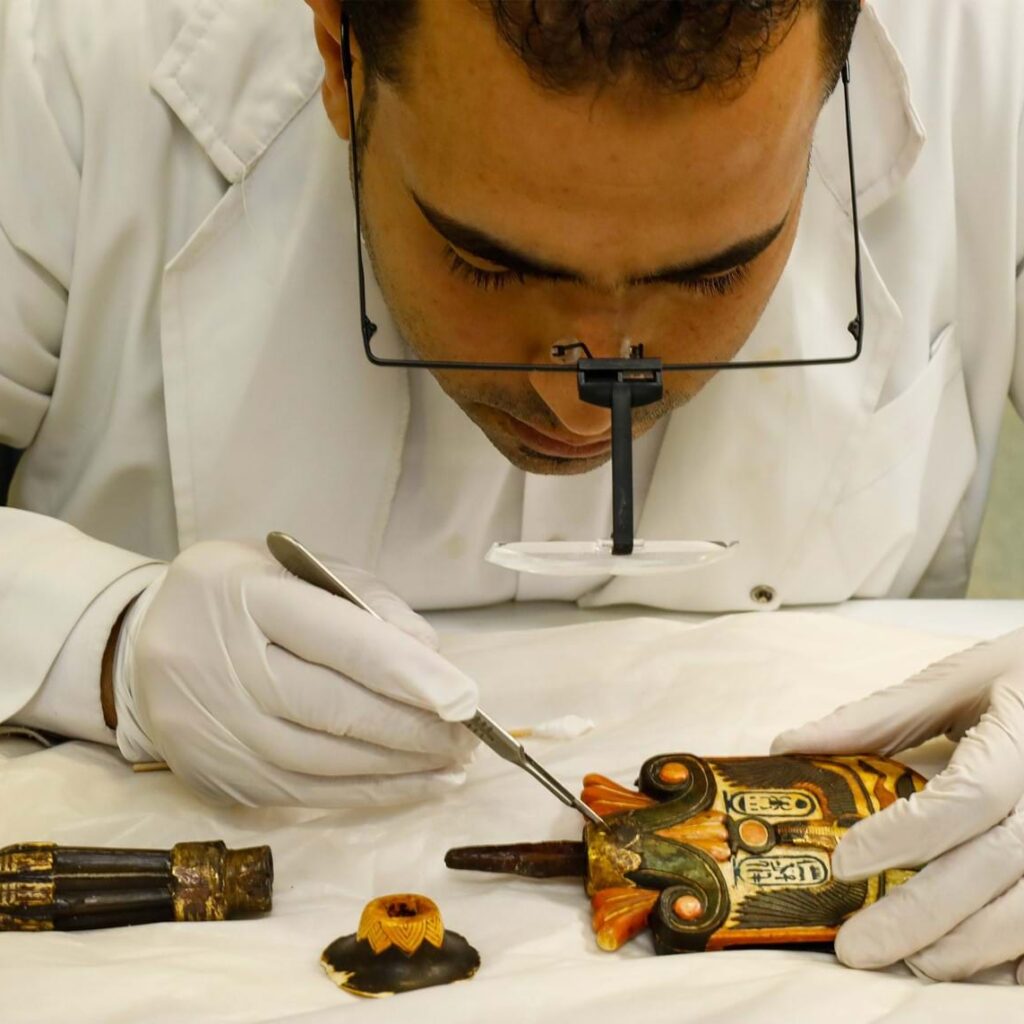
Beyond its exhibition halls, the Grand Egyptian Museum is a hub for scientific advancement and archaeological preservation. The GEM Conservation Center (GEM-CC) is one of the largest and most advanced restoration facilities in the Middle East and North Africa.

Equipped with cutting-edge technology—including specialized laboratories for wood, textiles, inorganic materials, and organic mummies—the center plays a critical role in preserving Egypt’s fragile heritage for future generations. International scholars and local conservators work hand-in-hand using non-invasive analysis, digital reconstruction, and precise environmental management.
Interactive Learning, Youth Programs, and Visitor Experience

Recognizing the importance of engaging younger generations and international audiences, the GEM incorporates smart technology and modern museum practices throughout its grounds:

  • Children’s Museum: A dedicated interactive space utilizing augmented reality (AR) and hands-on workshops to teach children about archaeology, ancient engineering, and art history.
  • Virtual Reality and Immersive Theaters: High-definition digital displays allow visitors to virtually step inside ancient tombs, walk through reconstructed temples, and experience the Nile Valley as it appeared thousands of years ago.
  • Commercial and Cultural Hub: The complex offers upscale dining options, retail shops featuring authentic Egyptian craftsmanship, conference centers, and open-air botanical gardens cultivated with plants native to ancient Egypt.

Sustainability and Modern Engineering

The Grand Egyptian Museum is a testament to sustainable architectural engineering. Designed with eco-conscious principles in mind, the complex incorporates:

  • Natural Lighting & Thermal Insulation: Translucent facades and passive cooling strategies reduce overall energy consumption.
  • Water Conservation: Advanced water recycling systems irrigate the surrounding desert gardens and landscape features.
  • Green Certification: The GEM was awarded gold-level green building certifications, highlighting Egypt’s commitment to sustainable cultural tourism.

Practical Visitor Guide: Planning Your Trip

To make the most of your visit to the Grand Egyptian Museum, planning ahead is essential given the vast size of the complex:

  • Ticketing & Reservations: Visitors are strongly advised to purchase tickets online in advance through the official museum portal to secure entry times, especially during peak travel seasons.
  • Best Time to Visit: Morning hours offer comfortable temperatures and optimal natural lighting through the alabaster facade. Allow at least 3 to 4 hours to explore the main galleries and atrium thoroughly.
  • Location & Accessibility: Located just 2 kilometers from the Pyramids of Giza, the museum is easily accessible via taxi, ride-sharing services, or guided tours. The facilities are fully wheelchair-accessible with ramps and elevators throughout all exhibition levels.

Conclusion: A Timeless Destination

The Grand Egyptian Museum is far more than a storehouse for antiquity; it is a dynamic bridge connecting ancient wisdom with modern wonder. By combining priceless archaeological treasures with world-class architecture, innovative technology, and a commitment to preservation, the GEM offers an unparalleled journey into the heart of human history.

For travelers, historians, and culture enthusiasts worldwide, a visit to the Grand Egyptian Museum is an essential pilgrimage—a chance to stand face-to-face with the pharaohs and marvel at a civilization whose grandeur continues to inspire the world.
Leave a Reply

Your email address will not be published. Required fields are marked *

Related stories

  • 5 Aug, 2026
Explore the Pyramids of Giza and the Great Sphinx, the last remaining Wonder of the Ancient World. Uncover...
  • 5 Aug, 2026
Explore Karnak Temple and Luxor Temple, the monumental heart of ancient Thebes. Discover the Hypostyle Hall, Avenue of...
  • 5 Aug, 2026
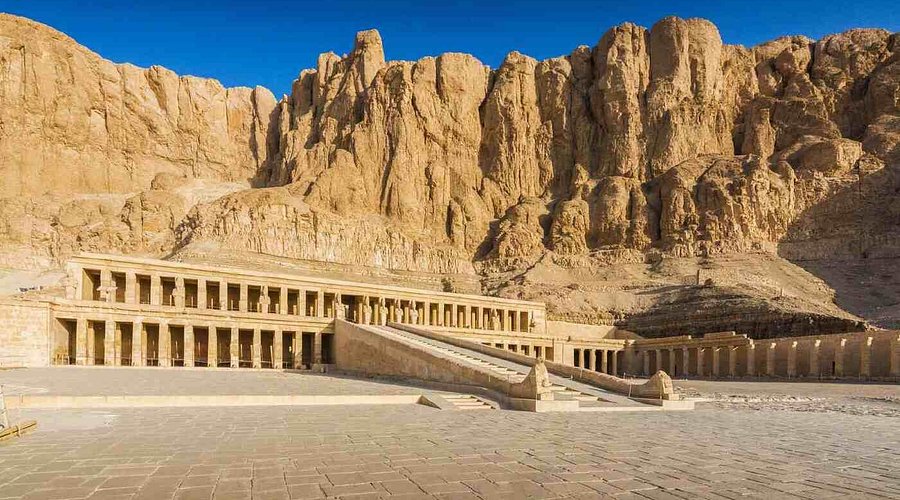
Explore the Valley of the Kings and Hatshepsut’s Mortuary Temple in Luxor. Discover ancient Pharaonic tombs, colorful wall...
  • 5 Aug, 2026
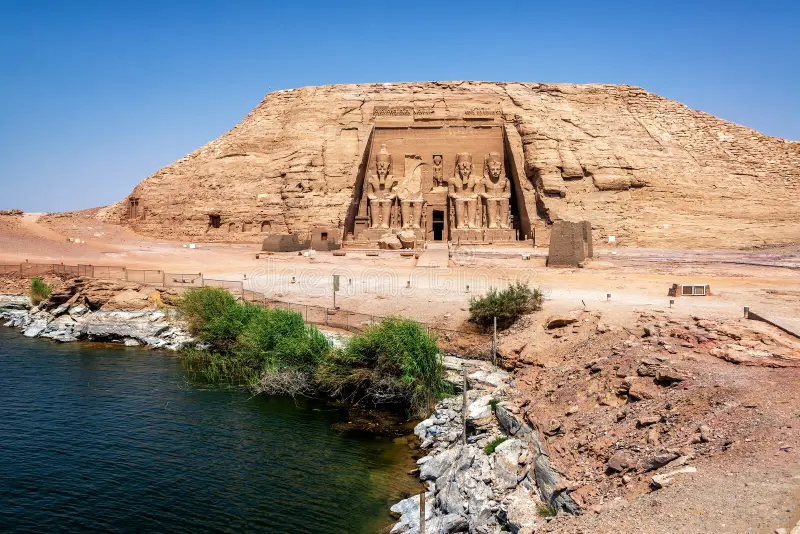
Discover the awe-inspiring Abu Simbel Temples in Nubia, Upper Egypt. Uncover the history, architectural genius, solar alignment phenomenon,...
  • 5 Aug, 2026
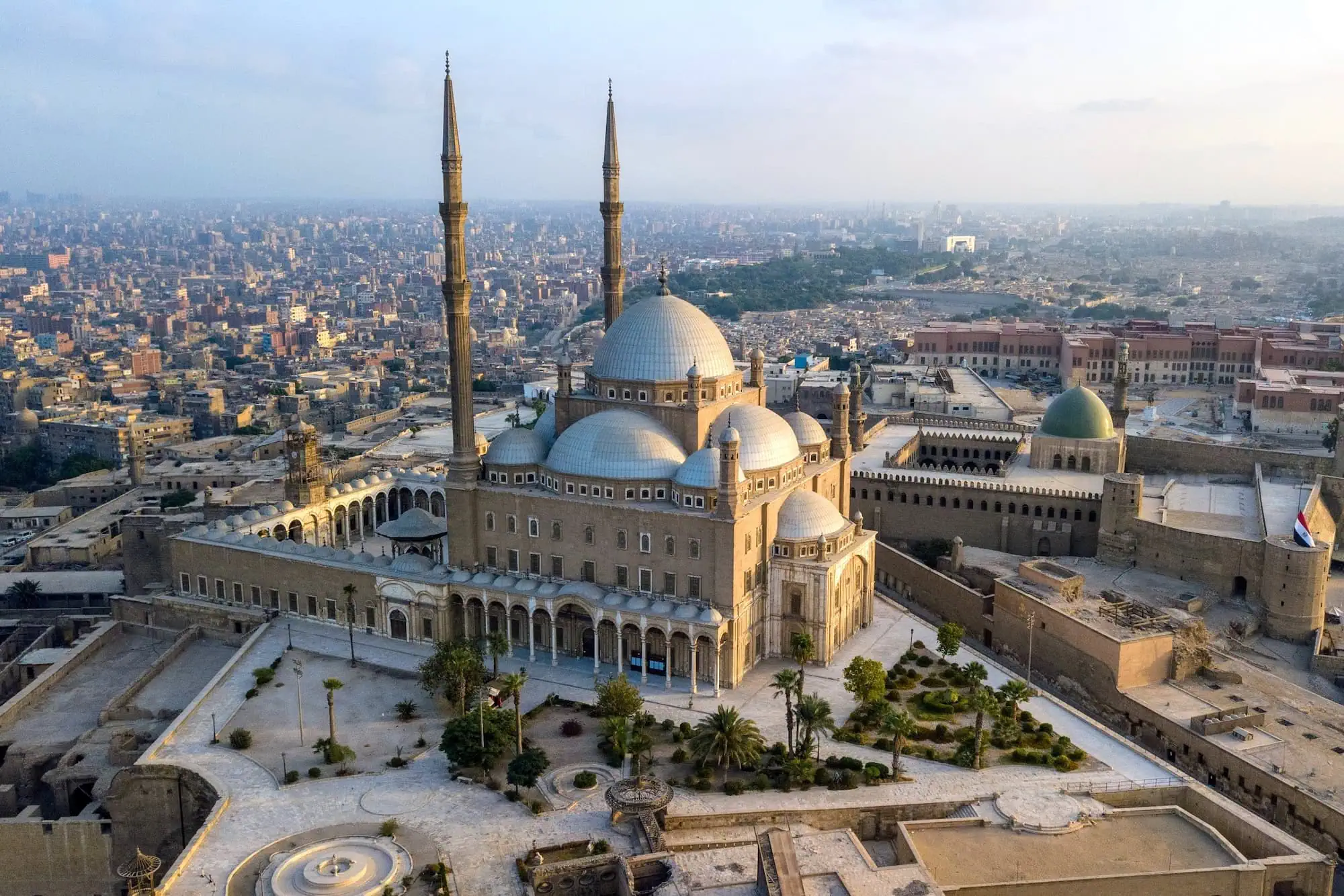
Explore the Citadel of Saladin, the Mosque of Muhammad Ali, Sultan Hassan Mosque, and Ibn Tulun in Cairo....
  • 5 Aug, 2026
Immerse yourself in Khan El-Khalili bazaar and El-Moez Street in Islamic Cairo. Discover historic Sabil-Kuttabs, centuries-old coffeehouses, traditional...
  • 5 Aug, 2026
Discover the National Museum of Egyptian Civilization (NMEC) in Fustat, Old Cairo. Explore the famous Royal Mummies Hall,...