Karnak and Luxor Temples: The Sacred Heart of Ancient Thebes
admin
August 5, 2026
Share
Facebook
Twitter
LinkedIn
Pinterest
Explore Karnak Temple and Luxor Temple, the monumental heart of ancient Thebes. Discover the Hypostyle Hall, Avenue of Sphinxes, sacred lakes, massive obelisks, and royal pylon gateways. Plan your journey through Egypt’s greatest open-air museum with our complete 1,000-word travel guide.
Title: The Temples of Karnak and Luxor: Walking Through the Sacred Realm of Amun-Ra
Introduction: Thebes, the Capital of the New Kingdom
Located along the fertile eastern banks of the Nile River in Upper Egypt, modern Luxor rests atop the ancient city of Thebes (Waset to the pharaohs). During the New Kingdom period (c. 1550–1070 BCE), Thebes served as the religious and political epicenter of Egypt’s imperial golden age. At the center of this sacred landscape stand two of the most impressive temple complexes in human history: Karnak Temple and Luxor Temple.
Connected by a magnificent two-kilometer ceremonial avenue, these monumental sanctuaries were dedicated to the Theban Triad—Amun-Ra (the king of gods), his consort Mut, and their son Khonsu. Today, they comprise the world’s largest open-air museum, drawing travelers from across the globe to marvel at their towering columns, colossal statues, and soaring obelisks.
Karnak Temple: The World’s Largest Religious Complex
Spanning over 200 acres, Karnak Temple Complex (Ipet-sut, meaning “The Most Select of Places”) is not merely a single temple, but a vast sprawling city of monuments built, expanded, and renovated by over thirty successive pharaohs over a period of 2,000 years.
From the Middle Kingdom through the Ptolemaic and Roman eras, nearly every major ruler—including Hatshepsut, Thutmose III, Akhenaten, Seti I, Ramses II, and Taharqa—left their indelible mark on Karnak’s sacred grounds.
1. The Great Hypostyle Hall
The crown jewel of Karnak is the breathtaking Great Hypostyle Hall. Spanning 50,000 square feet, this architectural marvel contains 134 massive sandstone columns arranged in 16 rows:
The Central Avenue: Features 12 towering columns rising 21 meters (70 feet) high with open papyrus capitals, designed to simulate a primordial forest at the dawn of creation.
Intricate Reliefs: The walls and columns are deeply carved with vivid hieroglyphic inscriptions, depicting Pharaohs Seti I and Ramses II offering sacrifices to the gods and celebrating victorious military campaigns.
The Sacred Lake and Soaring Obelisks
Deeper within the precincts of Amun-Ra lie several landmark features that define Karnak’s spiritual geography:
The Sacred Lake: A massive rectangular body of water fed directly by the Nile’s natural water table. Ancient priests used this lake for daily ritual purifications before performing sacred temple rites. Nearby sits the giant granite statue of the Sacred Scarab, a symbol of rebirth and solar resurrection.
The Obelisks of Hatshepsut and Thutmose I: Carved from single blocks of pink Aswan granite, these towering monoliths were raised to honor the sun god. Queen Hatshepsut’s surviving obelisk stands 29.5 meters high and weighs over 300 tons, remaining one of the tallest standing obelisks in Egypt.
The Avenue of Sphinxes: Reconnecting Ancient Sanctuaries
One of the most remarkable archaeological restoration projects in modern history is the full excavation and reopening of the Avenue of Sphinxes (Kebsh Pathway).
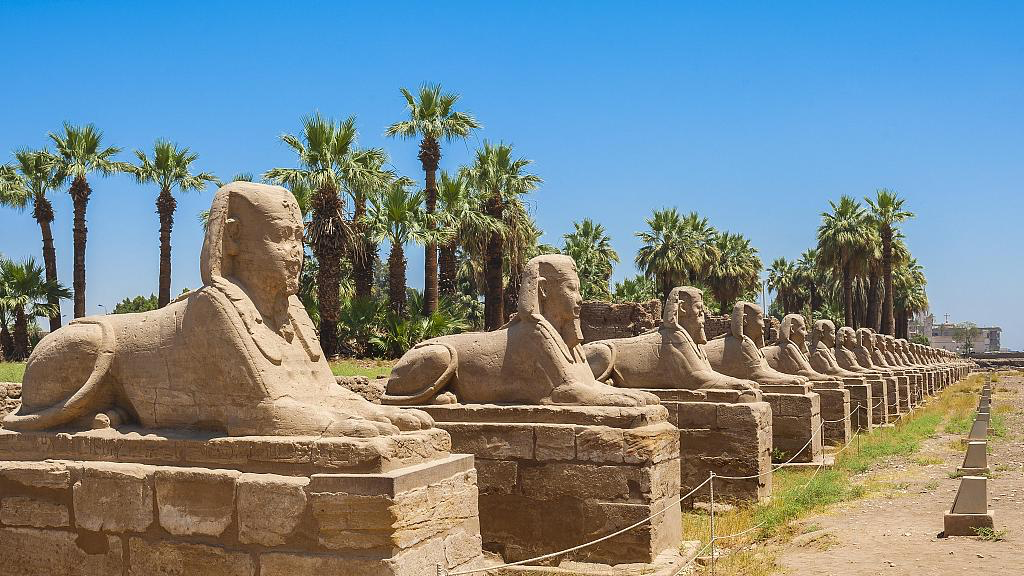
Spanning 2.7 kilometers (1.7 miles) between Karnak and Luxor Temples, this ancient ceremonial boulevard is lined with over 1,050 human-headed and ram-headed sphinx statues set atop stone pedestals:
The Opet Festival Procession: Once a year during the annual Opet Festival, the sacred statues of Amun-Ra, Mut, and Khonsu were carried in golden ceremonial barges along this avenue from Karnak to Luxor Temple in a grand celebration of cosmic renewal and royal coronation.
Modern Restoration: Fully inaugurated in 2021 after decades of excavation, walking this illuminated pathway allows modern visitors to follow directly in the footsteps of ancient Pharaonic priests and royal processions.
Luxor Temple: The Sanctuary of Royal Rebirth
While Karnak was dedicated to the universal power of Amun-Ra as supreme god, Luxor Temple (Ipet-resyt, meaning “The Southern Sanctuary”) held a distinct function: it was the primary site for the ritual transformation and divine renewal of the living Pharaoh.
Constructed primarily by Amenhotep III and expanded by Ramses II, Luxor Temple features a streamlined, harmonious layout designed for dramatic ceremonial entry:
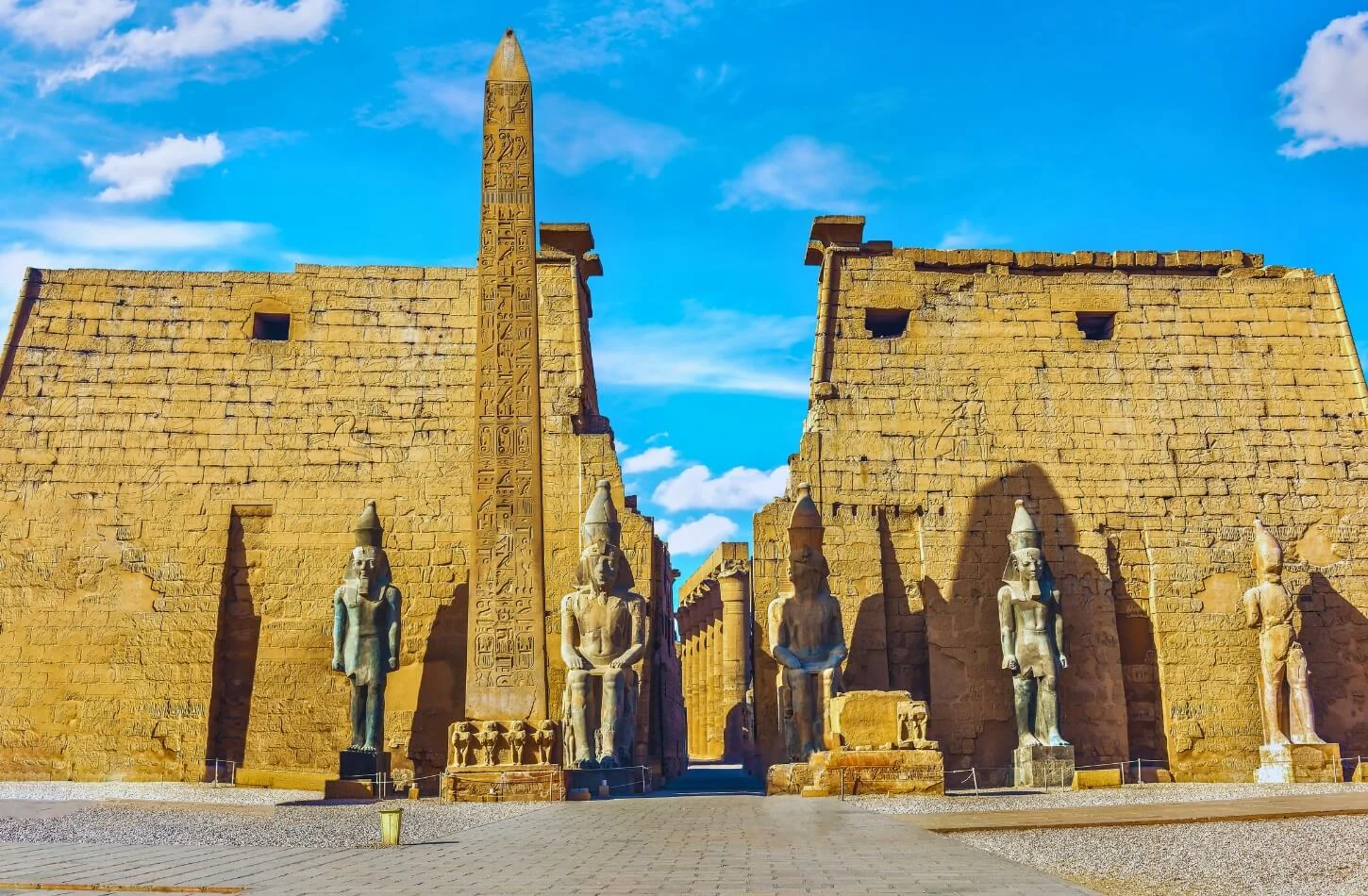
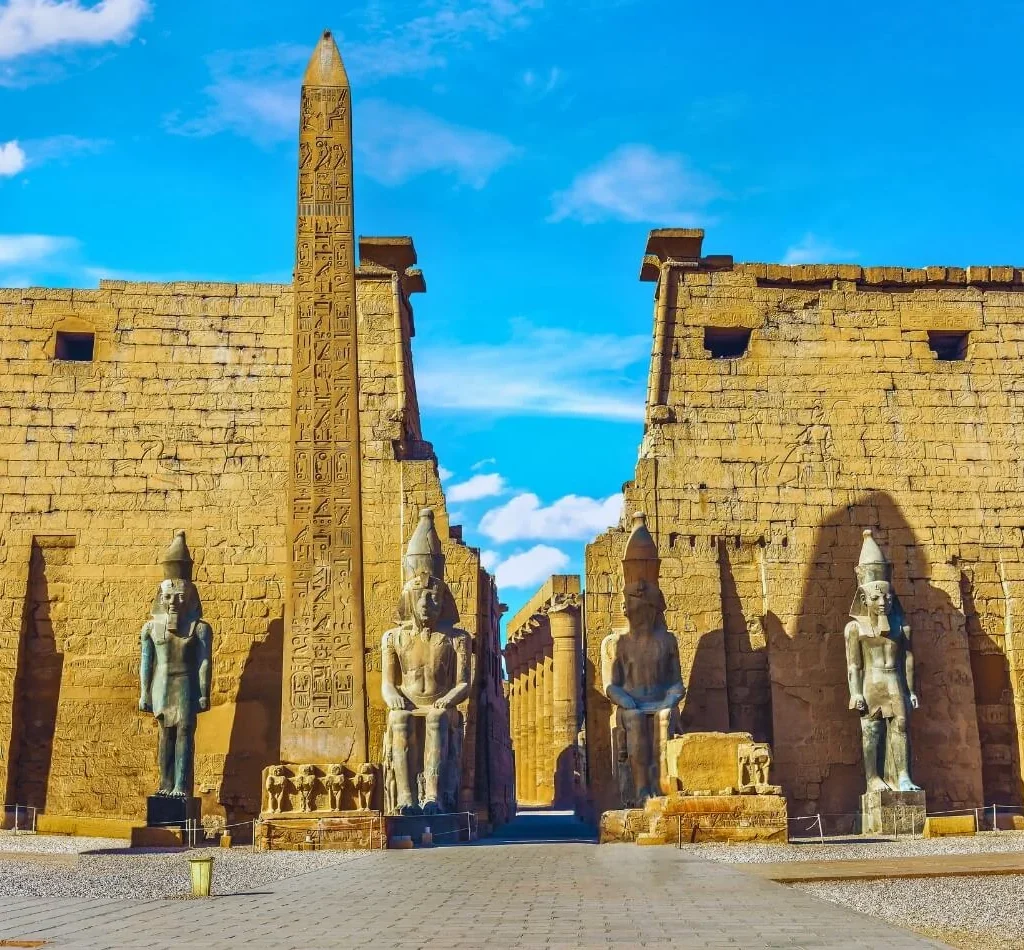
The First Pylon and Colossal Statues: Built by Ramses II, the imposing entrance gateway is guarded by twin seated colossi of Ramses II carved from black granite and a towering 25-meter pink granite obelisk (its twin obelisk was gifted to France in the 19th century and now stands in Paris at the Place de la Concorde).
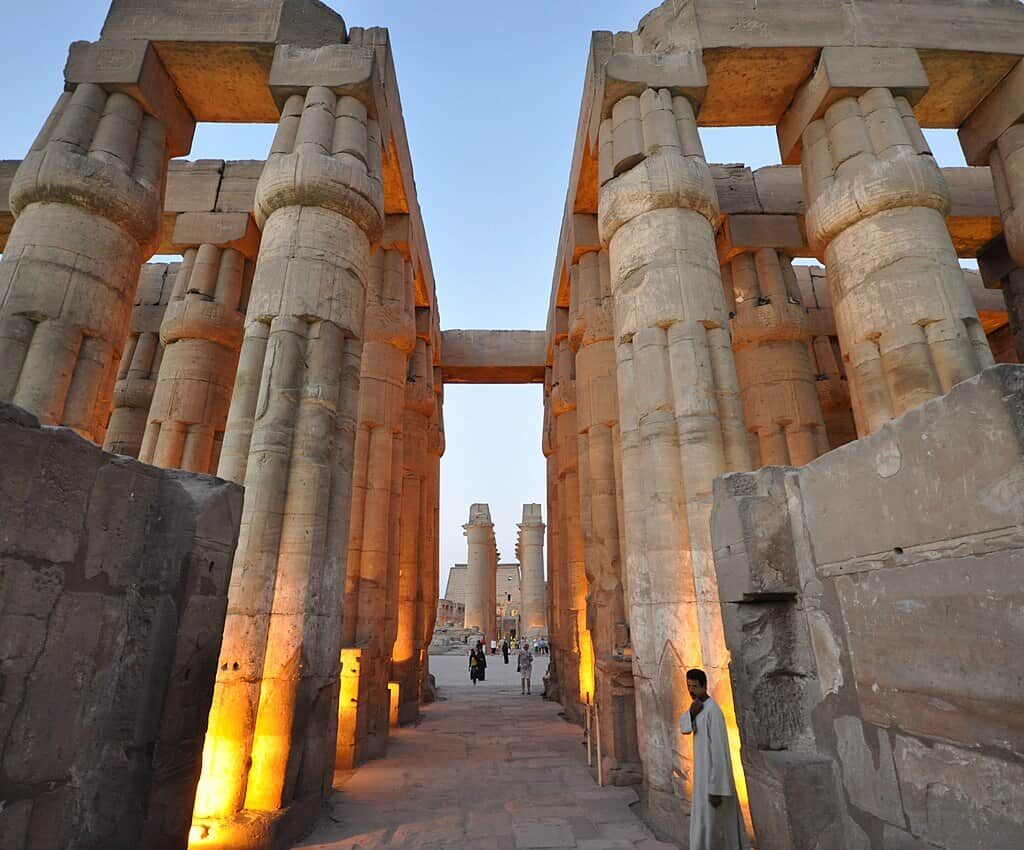
The Court of Amenhotep III: A magnificent courtyard surrounded on three sides by double rows of lotus-bud columns, leading into the dark hypostyle hall and inner sanctuary where the divine birth of the king was celebrated in stone wall carvings.
Layers of History: Pharaonic, Christian, and Islamic Heritage
Luxor Temple is a living testament to religious continuity across thousands of years. Within its walls, visitors can trace the overlapping layers of world history:
Pharaonic Foundations: Built during the 18th and 19th Dynasties as a royal divine shrine.
Alexander the Great’s Sanctuary: An inner chamber rebuilt by Alexander the Great, depicting the Macedonian king dressed as an Egyptian pharaoh presenting offerings to Amun.
Roman Military Camp & Christian Frescoes: During the late Roman Empire, the temple was converted into a military fortress, complete with plastered Christian wall paintings over Pharaonic reliefs.
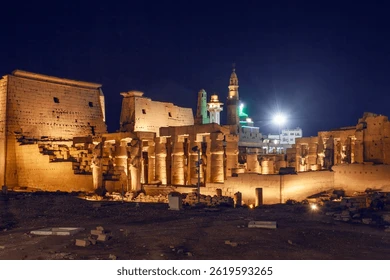
Abu Haggag Mosque: Built in the 13th century atop the northeastern ruins of the temple court, this active mosque remains integrated directly into the ancient Pharaonic structure, symbolizing centuries of uninterrupted worship.
Practical Visitor Guide: Planning Your Visit to Upper Egypt
To fully experience Karnak and Luxor Temples, consider these essential travel tips:
Best Time to Visit: Visit Karnak in the early morning to beat the heat and catch the golden morning light filtering through the Hypostyle Hall columns. Visit Luxor Temple in the late afternoon to experience it as day transitions to dusk, when dramatic nighttime floodlights illuminate the statues.
Combined Ticketing & Logistics: Both temples are located within Luxor city limits and are easily accessible via taxi, calèche (horse-drawn carriage), or on foot along the Nile cornice.
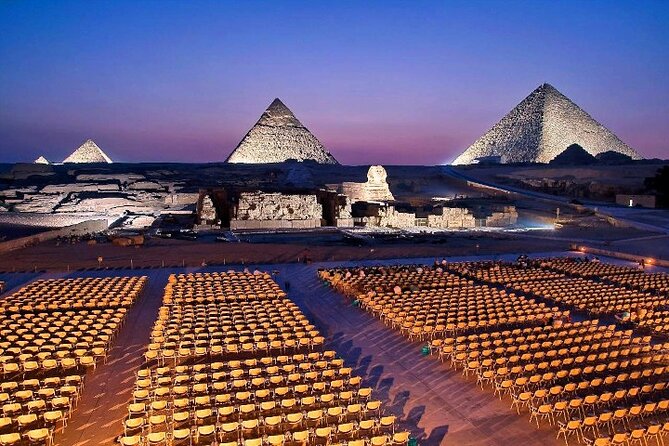
Sound & Light Show: Karnak hosts a famous nightly Sound & Light Show in multiple languages, narrating the dramatic history of Thebes as visitors walk through the lit-up ruins.
Conclusion: Timeless Masterpieces on the Banks of the Nile
Karnak and Luxor Temples are not mere silent monuments of a bygone era; they are breathtaking architectural odes to faith, power, and human artistic brilliance. Walking beneath the towering shadows of Karnak’s Hypostyle Hall or standing before Luxor’s grand entrance pylon offers an unforgettable, intimate connection with the spiritual heartbeat of ancient Egypt.
Immerse yourself in Khan El-Khalili bazaar and El-Moez Street in Islamic Cairo. Discover historic Sabil-Kuttabs, centuries-old coffeehouses, traditional...

 admin
August 5, 2026
admin
August 5, 2026