Abu Simbel Temples: The Sun Temples of Ramses II and Nefertari
admin
August 5, 2026
Share
Facebook
Twitter
LinkedIn
Pinterest
Discover the awe-inspiring Abu Simbel Temples in Nubia, Upper Egypt. Uncover the history, architectural genius, solar alignment phenomenon, and UNESCO salvage operation of Pharaoh Ramses II and Queen Nefertari’s rock-cut sanctuaries. Plan your journey with our complete 1,000-word travel guide.
Title: Abu Simbel: Ramses II’s Imperial Triumph and the Great Solar Phenomenon
Introduction: A Monument Built for Eternity
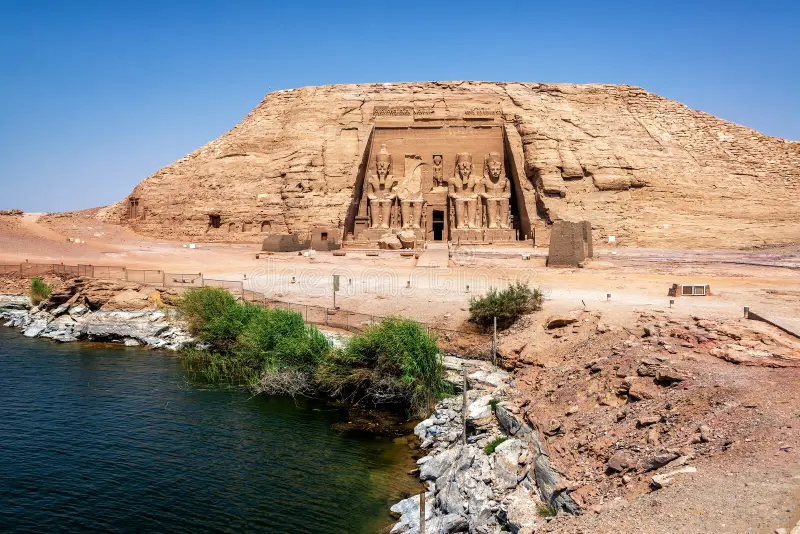
Carved directly into the solid sandstone cliffs overlooking the Second Cataract of the Nile River in southern Nubia, the Abu Simbel Temples stand as one of ancient history’s most breathtaking engineering and artistic achievements. Constructed during the 13th century BCE under the reign of Ramses II (Ramses the Great), this twin-temple complex was designed to broadcast the absolute power of the Egyptian Empire to its southern neighbors while honoring the divine sun gods.
Located nearly 300 kilometers south of Aswan, Abu Simbel is not only a masterpiece of Pharaonic antiquity, but also the centerpiece of the most astonishing modern archaeological rescue operation in human history.
The Great Temple of Ramses II: Architectural Grandeur
Dedicated to the universal sun gods Amun-Ra of Thebes, Ra-Horakhty of Heliopolis, and the deified king Ramses II himself, the Great Temple is renowned worldwide for its iconic 20-meter-tall facade featuring four colossal seated statues of the pharaoh.
The Monumental Facade: Each seated colossus depicts Ramses II wearing the Pschent (the double crown of Upper and Lower Egypt), a ceremonial royal beard, and an inscribed nemes headcloth. Smaller statues flanking his knees portray his beloved Royal Wife Nefertari, his mother Queen Tuya, and several of his royal children.
The Entrance Guard: Surrounding the giant colossi are carved reliefs of solar baboons raising their paws to greet the morning sun, alongside decorative friezes depicting conquered Nubian and Asian captives bound in traditional Pharaonic iconography.
Inside the Great Sanctuary: Pillared Halls and Royal Battles
Stepping through the narrow central portal of the Great Temple leads visitors into a series of cavernous rock-cut chambers stretching 60 meters (200 feet) deep into the mountain bedrock:
The Great Hypostyle Hall: Features eight massive square pillars lined with giant Osiride statues depicting Ramses II as Osiris, the lord of resurrection and the underworld.
The Battle of Kadesh Reliefs: The northern wall of the hall features some of the finest narrative military art in antiquity. Intricate carved scenes depict Ramses II driving his war chariot against the Hittites at the Battle of Kadesh (c. 1274 BCE), firing arrows and charging enemy lines under divine protection.
The Inner Sanctuary (Sanctum Sanctorum): The innermost dark chamber contains four carved seated stone statues: Ptah (god of darkness), Amun-Ra, Ramses II, and Ra-Horakhty.
The Solar Alignment Phenomenon: The Sun Miracle
One of the most extraordinary achievements of ancient Egyptian astronomical and mathematical engineering is the bi-annual Abu Simbel Sun Festival (also known as the Solar Alignment):
Astronomical Precision: Twice a year—historically on February 22 and October 22 (believed to mark Ramses II’s coronation and birthday)—the early morning sun rays shine directly through the entrance portal, penetrating 60 meters through the dark halls.
Illuminating the Gods: The solar beam lights up the faces of Amun-Ra, Ramses II, and Ra-Horakhty, leaving Ptah (the god associated with the underworld and darkness) in perpetual shadow. Thousands of travelers and astronomers gather at dawn to witness this ancient cosmic miracle.
The Small Temple of Queen Nefertari: A Tribute to Love and Divinity
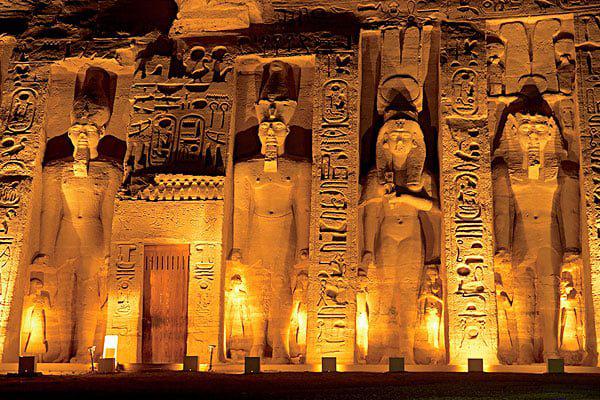
A short walk north of the Great Temple stands the Small Temple of Hathor and Nefertari. Built by Ramses II for his favored Chief Royal Wife, Queen Nefertari, this sanctuary holds a unique place in Pharaonic history:
Equal Stature in Stone: The facade features six standing colossi carved into the cliff face (four of Ramses II and two of Nefertari). In an unprecedented artistic gesture for Pharaonic Egypt, Nefertari’s statues are carved at the exact same height as the king’s, reflecting her immense political and personal influence.
Sanctuary of Hathor: The temple interior is dedicated to Hathor, the goddess of love, music, joy, and motherhood. The main hall contains six Hathor-headed columns and wall reliefs portraying Nefertari playing the sistrum (a sacred rattle) while offering incense to the goddesses.
The Great UNESCO Salvage Operation: Moving a Mountain
In the 1960s, the construction of the Aswan High Dam created Lake Nasser, a massive artificial reservoir whose rising waters threatened to permanently submerge Abu Simbel beneath the Nile.
In response to an urgent international campaign spearheaded by UNESCO, an engineering feat as dramatic as the temple’s original construction was undertaken between 1964 and 1968:
Dismantling the Mountain: Engineers cut the entire cliff face into over 1,000 individual stone blocks weighing between 20 to 30 tons each.
Rebuilding the Landscape: The entire twin-temple complex was transported 200 meters back and elevated 65 meters higher onto an artificial hollow reinforced-concrete dome designed to mimic the original mountain environment.
Preserving Alignment: Surveyors successfully preserved the precise astronomical orientation of the Great Temple, preserving the solar alignment phenomenon for future generations.
Practical Visitor Guide: Journeying to Nubia
Planning a visit to Abu Simbel requires advance preparation due to its remote, scenic location:
How to Get There: Travelers can take a short 45-minute domestic flight from Aswan directly to Abu Simbel Airport, join a convoy tour by road across the Nubian desert (approx. 3.5 hours each way), or arrive aboard an exclusive Lake Nasser cruise ship.
Best Time for Photography: Late morning and early afternoon light highlights the deep relief carvings on the main facades, while overnight stays allow visitors to experience the magical Sound & Light Show projected onto the temple walls after sunset.
Conclusion: A Triumph of Ancient and Modern Genius
Abu Simbel stands as a supreme monument to human willpower across millennia. It bridges the ancient world of Pharaonic imperial grandeur with modern international cooperation and engineering triumph. Standing beneath the giant stone gazes of Ramses II and Nefertari, travelers witness not only the glory of ancient Egypt, but a timeless sanctuary preserved forever against the sands of time.
Immerse yourself in Khan El-Khalili bazaar and El-Moez Street in Islamic Cairo. Discover historic Sabil-Kuttabs, centuries-old coffeehouses, traditional...

 admin
August 5, 2026
admin
August 5, 2026