The Pyramids of Giza and the Great Sphinx: Eternity Carved in Stone

Explore the Pyramids of Giza and the Great Sphinx, the last remaining Wonder of the Ancient World. Uncover the architectural secrets, historical mysteries, interior passageways, and surrounding tombs of Khufu, Khafre, and Menkaure on the Giza Plateau. Plan your visit with our ultimate, expert-curated travel guide to Egypt’s most famous landmark.

Title: The Pyramids of Giza and the Great Sphinx: The Last Surviving Wonder of the Ancient World

Introduction: Standing at the Cradle of Human Civilization

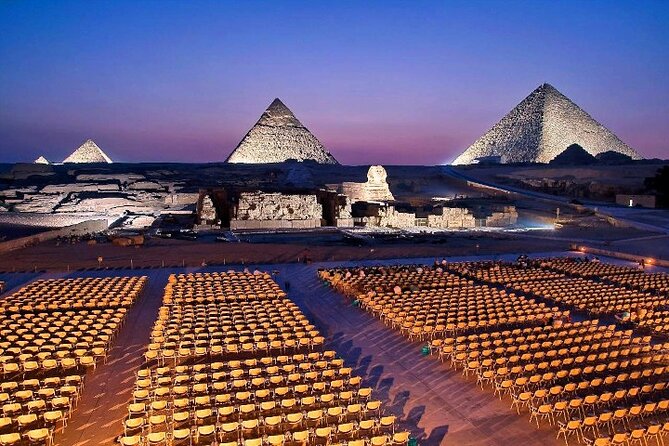
Rise above the golden desert dust of the Giza Plateau, the Great Pyramids of Giza and the Great Sphinx stand as the most enduring symbols of human ambition, engineering mastery, and ancient spirituality. Built during the 4th Dynasty of Egypt’s Old Kingdom (c. 2600–2500 BCE), these iconic limestone monuments have captivated travelers, scholars, and conquerors for over four millennia.

As the only surviving entry on the classic list of the Seven Wonders of the Ancient World, the Giza Plateau offers a profound journey into the heart of Pharaonic ideology, solar theology, and monumental architecture.
The Great Pyramid of Khufu: Architectural Perfection

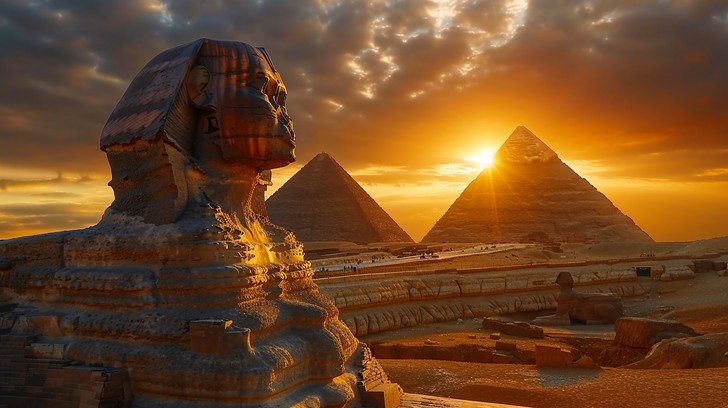
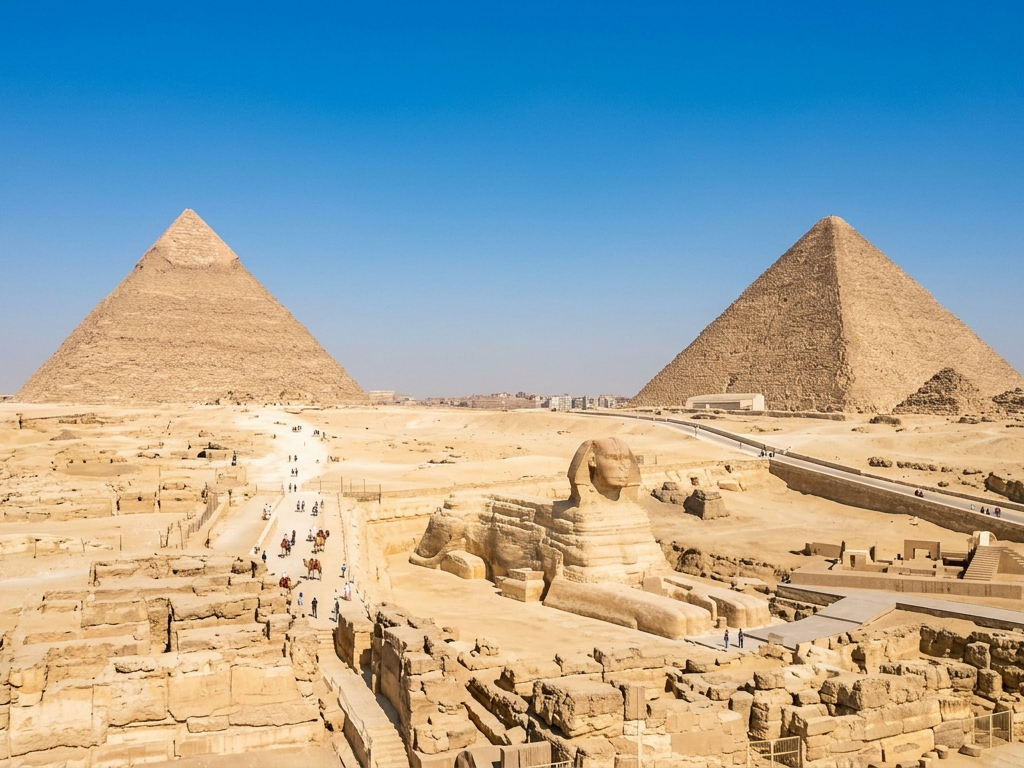
The largest of the three monuments, the Great Pyramid of Khufu (famously known to the Greek world as Cheops), is an unprecedented masterpiece of stone construction. Originally rising to a height of 146.6 meters (481 feet), it was the tallest man-made structure in the world for more than 3,800 years.
  • Engineering Scale: Composed of approximately 2.3 million stone blocks—each weighing between 2.5 to 15 tons—the pyramid was built with astonishing mathematical precision. Its four bases align almost perfectly with the cardinal points of the compass (North, South, East, West).
  • The Outer Casing: Originally, the Great Pyramid was covered in highly polished white Tura limestone casing stones. These stones reflected the brilliant Egyptian sunlight like a giant mirror, earning the monument its ancient name Akhet Khufu (“The Horizon of Khufu”).

Exploring the Interior: Passages, Chambers, and Theories

Unlike many later royal tombs that were primarily underground, the Great Pyramid features a complex series of elevated internal corridors and chambers carved directly into its core:

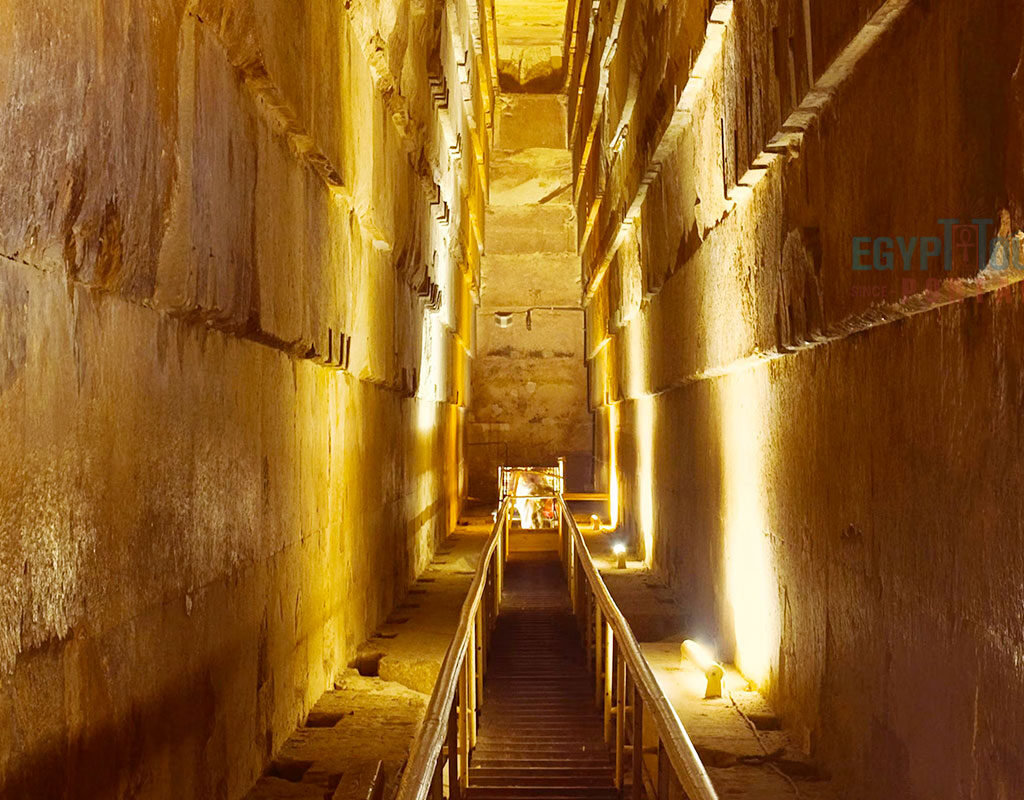
  1. The Ascending Passage & Grand Gallery: A rising, corbelled-vault stone corridor stretching over 46 meters in length and rising 8.6 meters high. It stands as a marvel of ancient stone masonry.
  2. The King’s Chamber: Constructed entirely from massive blocks of red Aswan granite, this high-pressure chamber houses Khufu’s empty monolithic granite sarcophagus. Above its ceiling lie five relief chambers designed to distribute the immense weight of the stone blocks above.
  3. The Queen’s Chamber and Subterranean Pit: Additional chambers that highlight the evolving structural plans during the pyramid’s multi-decade construction.

The Pyramids of Khafre and Menkaure: Expanding the Necropolis

To the southwest of the Great Pyramid stand the monuments of Khufu’s successors, which complete the iconic Giza triad:

  • The Pyramid of Khafre: Built by Khufu’s son, Khafre (Chephren), this pyramid appears taller than the Great Pyramid because it sits on higher bedrock. It is instantly recognizable by the original polished limestone casing stones that still crown its summit. Khafre’s complex also preserves the best-preserved Valley Temple on the plateau.
  • The Pyramid of Menkaure: Built by Khafre’s successor, Menkaure (Mykerinos), this is the smallest of the three main pyramids, rising to 65 meters. Its lower tiers were cased in fine red granite from Aswan, some of which remain unfinished, offering valuable archaeological clues regarding ancient construction techniques.

The Great Sphinx: Guardian of the Giza Plateau

Carved directly from a single massive outcrop of limestone bedrock, the Great Sphinx of Giza is one of the world’s largest and oldest monolithic statues. Measuring 73 meters in length and 20 meters in height, it depicts a mythical creature with the body of a lion and the head of an Egyptian king—traditionally believed to represent Pharaoh Khafre.
  • Symbolic Meaning: Combining the formidable strength of a lion with the divine intellect of the Pharaoh, the Sphinx served as a cosmic guardian over the royal necropolis facing the rising sun in the east.
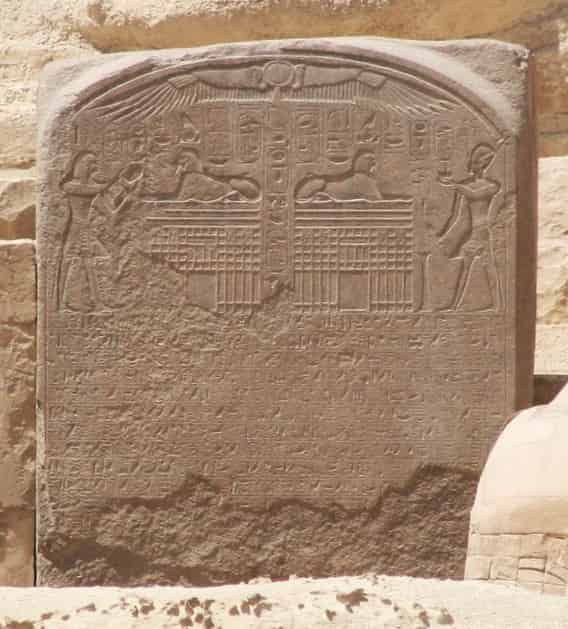
  • The Dream Stele: Positioned between the giant paws of the Sphinx sits an inscribed granite slab placed by Pharaoh Thutmose IV (18th Dynasty). It recounts a dream in which the Sphinx promised Thutmose the throne of Egypt if he cleared the desert sands that had buried the monument up to its neck.

The Workers’ Village and Royal Funerary Complexes

Popular myths historically suggested that the pyramids were built by enslaved labor. However, modern archaeological excavations directed by world-renowned Egyptologists have disproven this myth completely.

Excavations at the Giza Workers’ Village have uncovered vast bakeries, breweries, living quarters, and medical facilities. Discoveries reveal that the builders were skilled, well-fed Egyptian laborers and artisans who worked in seasonal shifts. Their nearby tombs reflect the immense pride and respected status they held in ancient Egyptian society.

Sound, Light, and Nighttime Experiences

As the sun sets over the Giza Plateau, the ancient landscape transitions into a theatrical arena. The famous Giza Pyramids Sound & Light Show uses dramatic projections, music, and narration to bring the story of the pharaohs, the building of the monuments, and ancient myths back to life under the starry desert sky.

Practical Visitor Guide: Planning Your Giza Plateau Tour

To enjoy an unforgettable experience when exploring the Giza Pyramids, keep these essential travel tips in mind:

  • Operating Hours & Tickets: The plateau opens early in the morning (typically around 7:00 AM or 8:00 AM). General entry grants access to the plateau grounds, while separate tickets are required to enter inside the pyramids.
  • Best Time to Visit: The cooler months between October and April provide ideal weather for outdoor walking. Early morning visits offer fewer crowds and milder temperatures.
  • Getting Around: Visitors can explore the plateau on foot, hire official electric golf carts, or take traditional camel and horseback rides across designated desert panoramic areas.

Conclusion: An Unforgettable Monument to Human Genius

The Pyramids of Giza and the Great Sphinx are far more than stone structures; they represent human ingenuity overcoming the boundaries of time. Standing at the foot of these immense monuments, one truly understands the famous ancient Arabic proverb: “Man fears Time, but Time fears the Pyramids.”

Whether gazing up at Khufu’s grand summit or making eye contact with the enigmatic Sphinx, a journey to Giza remains an essential, bucket-list pilgrimage for every global traveler.
Leave a Reply

Your email address will not be published. Required fields are marked *

Related stories

  • 5 Aug, 2026
Discover the Grand Egyptian Museum (GEM), the world’s largest archaeological museum complex dedicated to a single civilization. Located...
  • 5 Aug, 2026
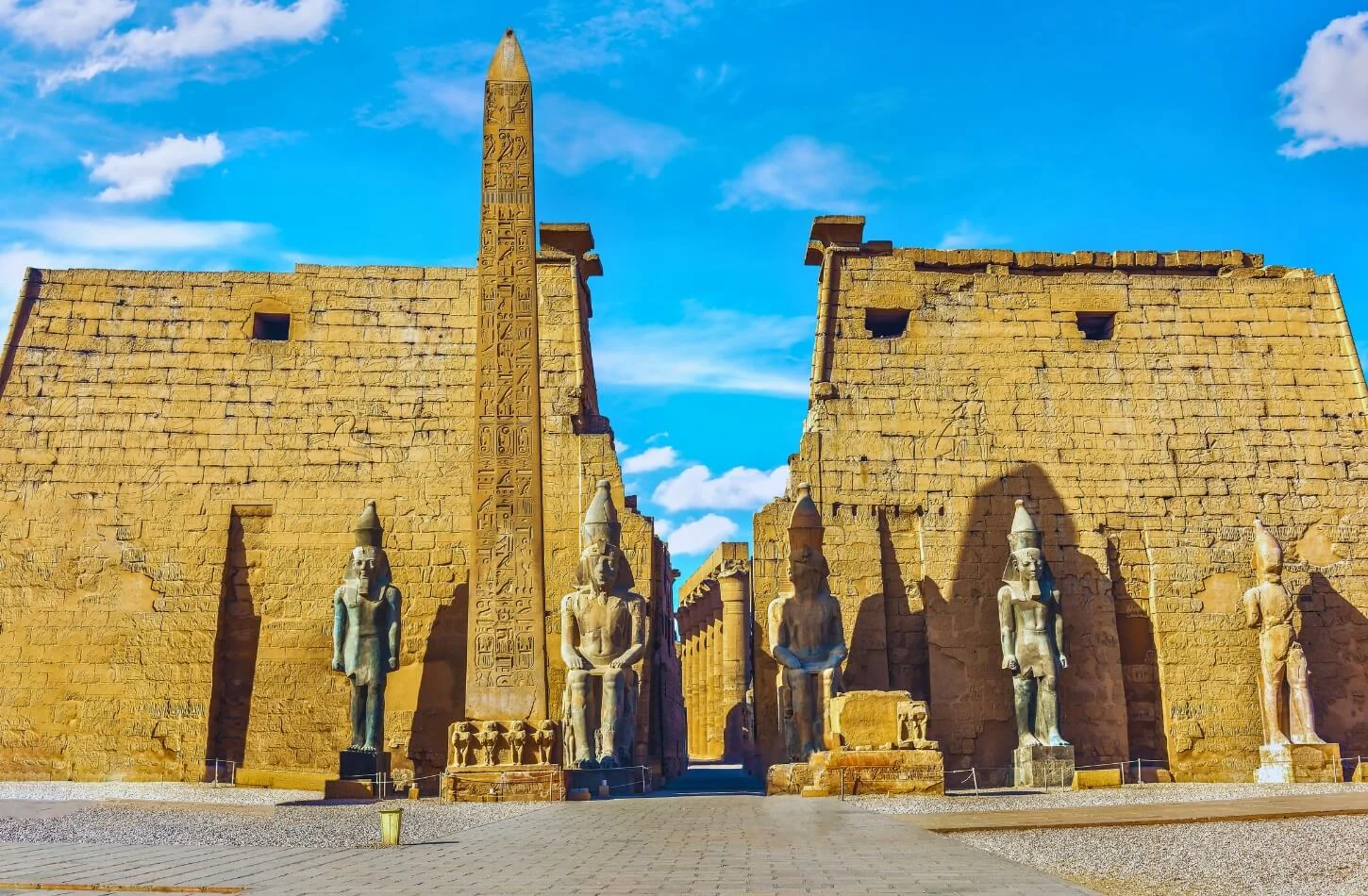
Explore Karnak Temple and Luxor Temple, the monumental heart of ancient Thebes. Discover the Hypostyle Hall, Avenue of...
  • 5 Aug, 2026
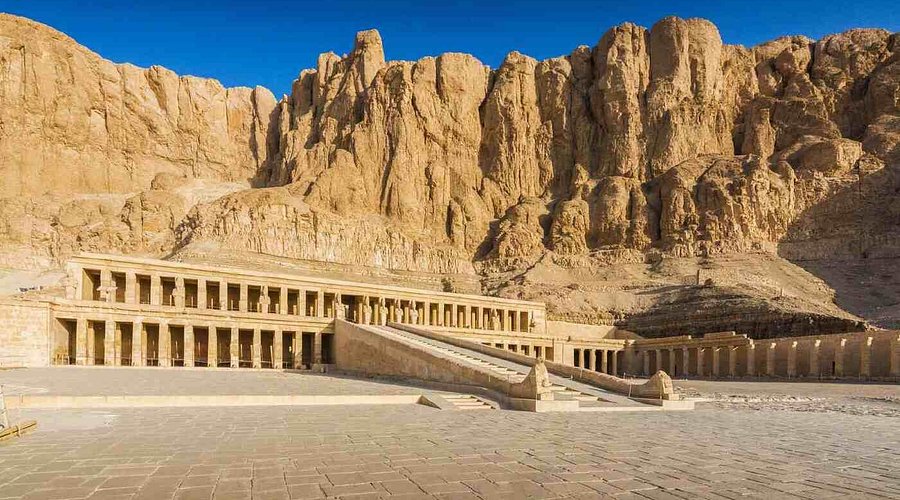
Explore the Valley of the Kings and Hatshepsut’s Mortuary Temple in Luxor. Discover ancient Pharaonic tombs, colorful wall...
  • 5 Aug, 2026
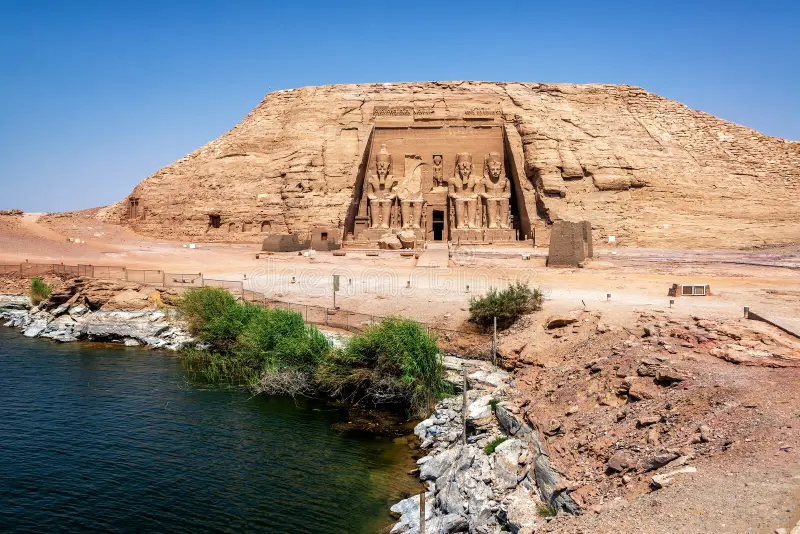
Discover the awe-inspiring Abu Simbel Temples in Nubia, Upper Egypt. Uncover the history, architectural genius, solar alignment phenomenon,...
  • 5 Aug, 2026
Explore the Citadel of Saladin, the Mosque of Muhammad Ali, Sultan Hassan Mosque, and Ibn Tulun in Cairo....
  • 5 Aug, 2026
Immerse yourself in Khan El-Khalili bazaar and El-Moez Street in Islamic Cairo. Discover historic Sabil-Kuttabs, centuries-old coffeehouses, traditional...
  • 5 Aug, 2026
Discover the National Museum of Egyptian Civilization (NMEC) in Fustat, Old Cairo. Explore the famous Royal Mummies Hall,...