admin
August 5, 2026
admin
August 5, 2026
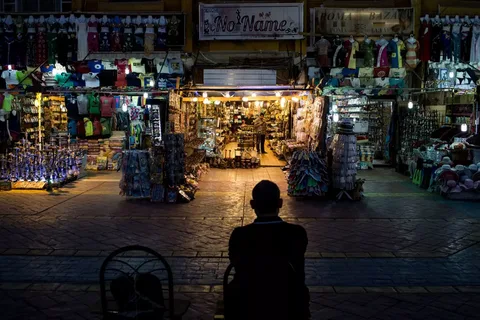
Immerse yourself in Khan El-Khalili bazaar and El-Moez Street in Islamic Cairo. Discover historic Sabil-Kuttabs, centuries-old coffeehouses, traditional artisan workshops, brass lamps, and Fatimid architectural masterpieces. Plan your tour with our ultimate 1,000-word visitor guide.
Wandering through the narrow, winding alleyways of Khan El-Khalili and along the stone-paved thoroughfare of El-Moez Li-Din Allah Al-Fatimi Street feels like stepping directly into the enchanted pages of The One Thousand and One Nights. Located in the historic core of Cairo, this vibrant district stands as one of the oldest, most bustling open-air marketplaces and cultural open-air museums in the Middle East.
Founded during the Fatimid era in the 10th century and expanded throughout the Mamluk and Ottoman periods, Islamic Cairo is a UNESCO World Heritage site where ancient architectural monuments, traditional craft workshops, bustling spice markets, and centuries-old coffeehouses thrive together in vibrant harmony.
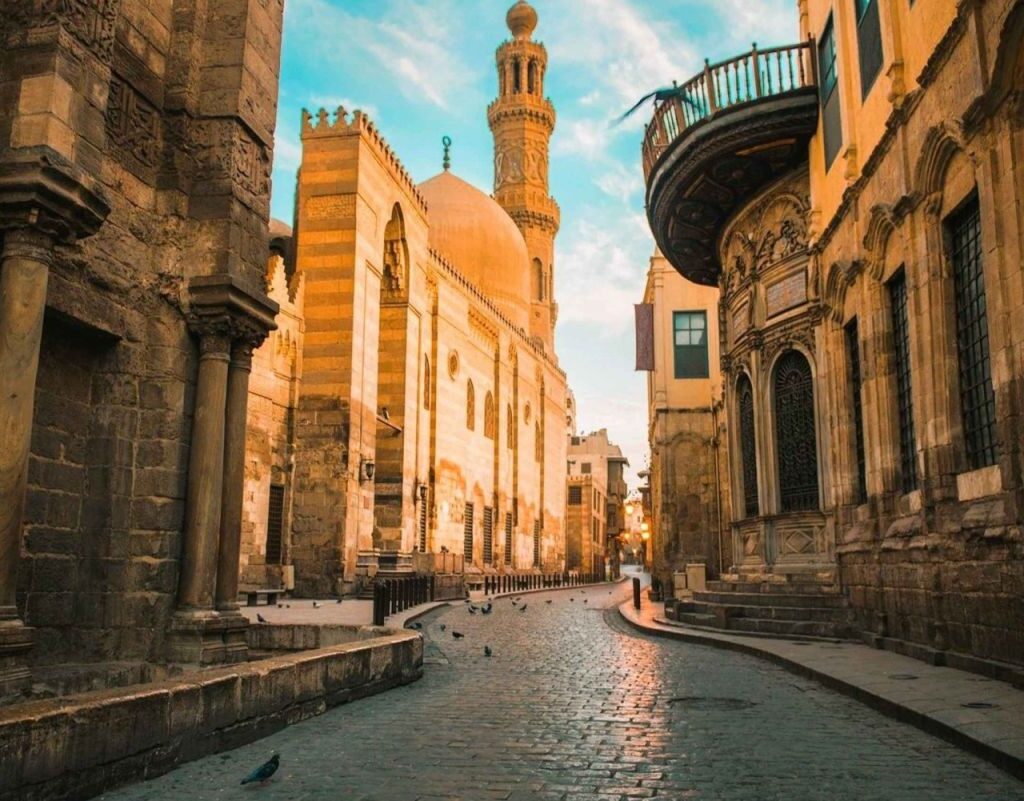
The story of Khan El-Khalili begins in 1382 CE during the Mamluk Sultanate, when Emir Djaharks el-Khalili constructed a massive commercial caravanserai (known locally as a khan or wikala) on the site of a former Fatimid burial ground.
Designed as a central hub for international merchants traveling along the Silk Road and trans-Saharan trade routes, the khan provided secure storage, lodging, and trading stalls for spices, textiles, precious stones, and silks imported from Asia, Africa, and Europe:
Intersecting Khan El-Khalili is El-Moez Street, a one-kilometer historic boulevard named after the Fatimid Caliph Al-Moez Li-Din Allah, who founded Cairo in 969 CE. According to UNESCO, this single street boasts the highest density of medieval Islamic architectural treasures anywhere in the world.
Walking along El-Moez Street reveals a rich array of historic structures that showcase the evolution of Islamic building traditions across dynasties:
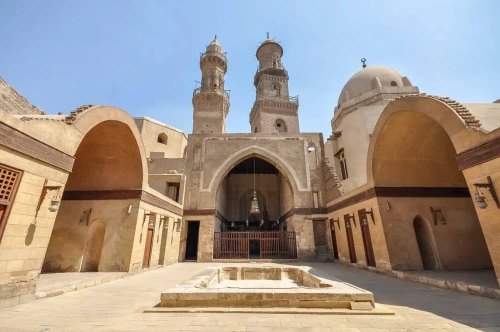
Built in 1284 CE, this monumental Mamluk complex includes a madrasa (school), a maristan (one of the world’s earliest advanced teaching hospitals), and a mausoleum. The mausoleum features intricate marble inlay, carved stucco, and stained-glass windows often compared in beauty to the Alhambra Palace in Spain.
Dotted along the street are numerous Sabil-Kuttabs—unique two-story public charity institutions featuring a ground-floor public water fountain (sabil) and a top-floor Quranic primary school (kuttab) for orphans. Notable examples include the Sabil-Kuttab of Abdel Rahman Katkhuda, renowned for its delicate Ottoman-style carved stone facade.
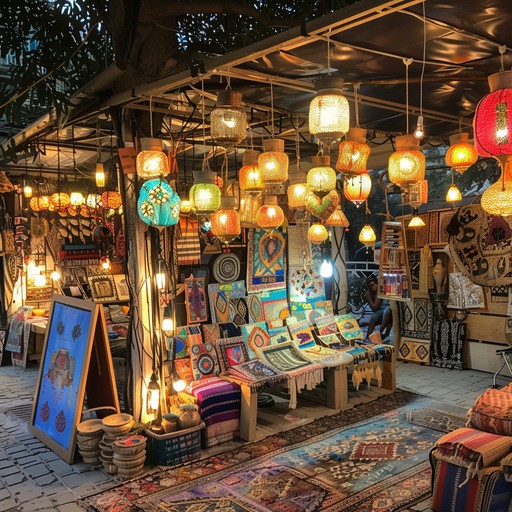
Khan El-Khalili is not merely a retail market; it is an active center for traditional Egyptian craftsmanship, where skills have been passed down through generations of artisan families:
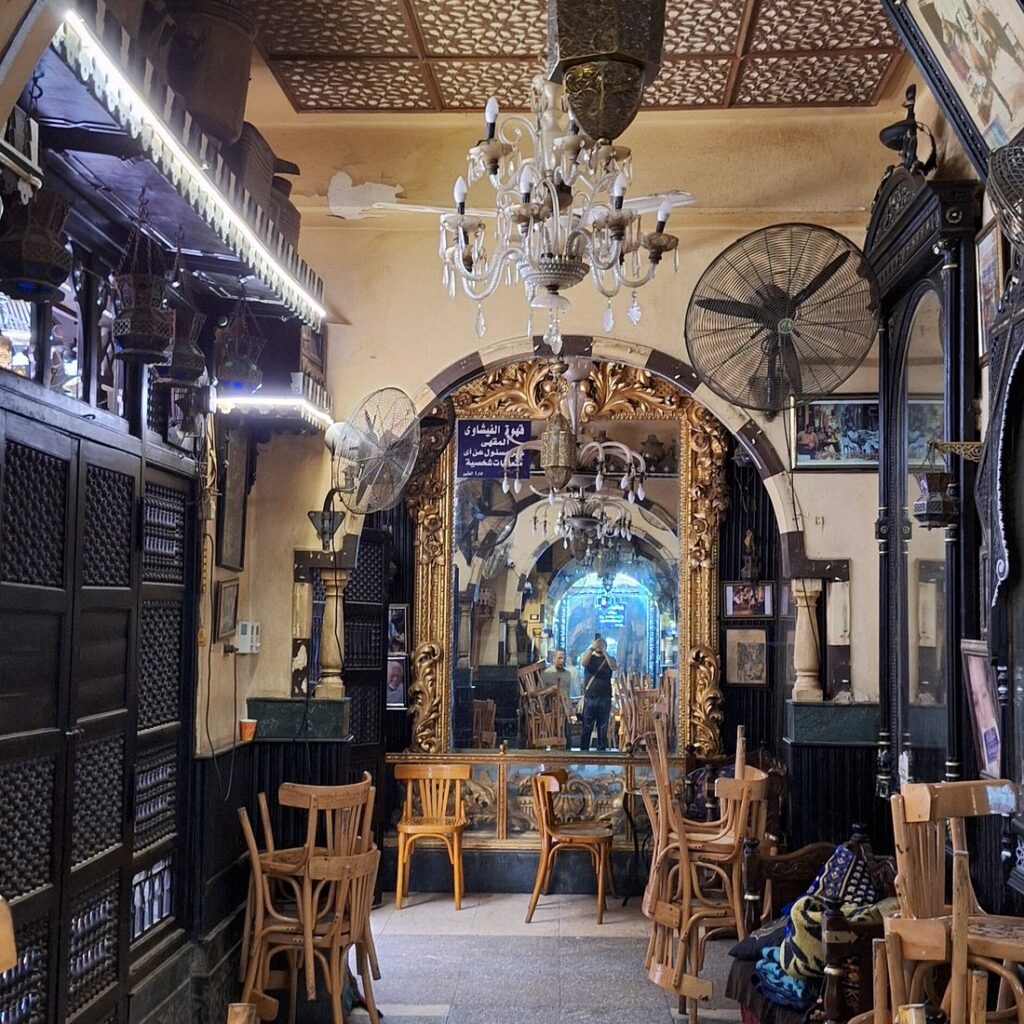
No journey through Khan El-Khalili is complete without taking a restful pause at El-Fishawy Cafe (Qahwat El-Fishawy). Established in 1797, this iconic coffeehouse has served guests continuously for over two centuries, operating 24 hours a day.
Adorned with large antique gilded mirrors, dark wooden furniture, and brass tables, El-Fishawy was the legendary gathering spot for Egyptian intellectuals, artists, and poets—most notably Egypt’s Nobel Prize-winning novelist Naguib Mahfouz, who drew inspiration for his famous Cairo Trilogy from the surrounding alleys.
Visitors can sit back, sip traditional hot mint tea or dark Arabic coffee brewed with cardamom, listen to street musicians, and soak in the vibrant energy of Cairo’s night life.
To enjoy an unforgettable experience in Khan El-Khalili and El-Moez Street, keep these practical travel recommendations in mind:
Khan El-Khalili and El-Moez Street represent the living heart of Cairo—a place where history is not confined behind museum glass, but lived daily amid stone arches, fragrant spice sacks, and clinking tea glasses. Exploring these timeless lanes offers an authentic, unforgettable sensory journey into the soul of Egyptian culture.